Sunday, August 29, 2010

Browne miscellanea


In addition to the major works of Sir Thomas Browne (1605-82), namely Religio Medici, Pseudodoxia Epidemica, the 1658 two-in-one Discourses, 'Urn-Burial' and 'The Garden of Cyrus' and the posthumously published 'Christian Morals', there are a number of minor and miscellaneous writings by Browne.

Foremost amongst his minor writings are the 12 miscellaneous tracts. Topics as diverse as botany in the Bible, the Saxon language, ancient earthworks, a Nostradamus-like prophecy on the world's future as well as an inventory of lost and imaginary books, pictures and objects, constitute the bulk of the 12 miscellaneous tracts available on-line.

The collected miscellaneous writings of Sir Thomas Browne are a detailed portrait of the learned physician and his many hobbies and interests; they also give a unique insight into life in 17th century Norwich and Norfolk. Browne's notes on the Natural History of Norfolk in particular remains a valuable and fascinating record. Reprinted as a separate volume in 1905, it was considered worthy of study by the renowned Naturalist Ted Ellis. Browne's descriptions of rural Norfolk in the 17th century read as a much wilder habitat, densely populated with all manner of bird-life. His occasional usage of the phrase 'Broad waters', from where the very term 'Norfolk Broads' originates is of particular note.

Browne describes Norfolk bird-life and his witnessing of bird behaviour against a predator thus-

Teale, Querquedula, wherein scarce any place more abounding. The condition of the country & the very many decoys, especially between Norwich and the sea, making this place very much to abound in wilde fowle..........Divers sorts of Eagles come over & are seen in the winter, & especially such as pray upon fowle in broad waters & marshes.......Fulicae cottae, cootes, in very great flocks upon the broad waters. Upon the appearance of a Kite or buzzard I have seen them unite from all parts of the shoare in strange numbers, when if the Kite stoopes neare them they will fling up and spread such a flash of water up with their wings that they will endanger the Kite, & so keepe him of agayne & agayne in open opposition;

Falconry terms are not only alluded to in Religio Medici (Part 1 :10)  as well as  a short tract on Falconry among the miscellaneous tracts (tract 5), the question as to how much Browne was a keen bird-fancier and a participant in the gentleman's sport of hawking is made clearer through a perusal of the miscellaneous writings.

Some fenne Eagles shott in the wing, I have known kept a year or 2 after & fed with guts, fish herrings, or any offell; very tame and inoffensive. An Aquila Gesneri, or of the great sort, was given me in this countrie which I kept 2 years feeding it only with cats, puppes, and rats, without any water all that time. I offered it a gentleman to make a flight at the Bustard, butt it succeeded not. It was presented at last to the College of Physitians at London, where it perished in the common fire.

Far from a puritan in his tastes, Browne was  perhaps an epicure in his dining habits. In an age of few pleasures its amusing to read in his Notes on the cookery of the Ancients

I wish we knew more clearly the aids of the ancients, their sauces, flavours, digestives, tasties, slices, cold meats, and all kinds of pickles. Yet I do not in dining know whether they would have surpassed salted sturgeons’ eggs, anchovy sauce, or our royal pickles.

Browne's gourmet tendencies are confirmed in this commonplace notebook entry -

Take a Legge of mutton, roast it gently & slash it that the gravie may come out & so agayne till it will runne: then take the gravie & lett it seperate the fat by cooling, then put thereto a quarter of a nuttmegge, a small sprigge of Rosmarie, & a little Thmye: set it upon a gentle fire and add unto it 2 spoonfulls of claret & a little salt. You may if you please beat up the yelke of an egge therewith & take x or xii spoonfulls. 2 neat pickles may bee contrived, the one of oysters stewed in their owne liquor with Thyme, Lemon pill... olive, onyon, mace, pepper; adding Rhenish wine, elder vinegar, 3 or 4 pickle cowcumbers. Another with equall parts of the liquor of oysters & the liquor that runs from herings newly salted, with the former Ingredients, adding upon occasion, dissolving anchovie therein, or pickling therin a few smelts, or Garlick, especially the seeds thereof. High esteem was made of Garum by the ancients, & was used in sawces, puddings, &c. If simply made with Aromatic mixture, as is delivered, it cannot butt have an ungrateful smell, however a haut goust & appetisant tange, for it was the liquore or the resolution of the gutts of fishes, salt and insolated. This way may bee tried by us yeerly, & is still continued in Turkey. And may bee made out of the entralls of mackarel, the liquor that runs from the herings, wh. may dissolve Anchovies other Apnia's, & with mixture of oysters & Limpetts & testaceous fishes,....whereof every one makes his one pickle varieth the taste of sea water. The neatest way is to have pickles always readie, wherein wee may make additions at pleasure, or use them simply in sawces. The ancients loaded their pickles with cummin seed & the like, distasteful unto our senses.

Meticulous attention to detailed description in Browne's cookery notes is equally evident in his 'elaboratory' operations. Indeed some alchemists even likened the art of alchemy to cookery. Not only is alchemy discussed in Religio Medici, but many esoteric authors are listed as once in his library. There's also the fact that the 1658 Discourses are constructed upon esoteric schemata, employing highly-original symbolism of considerable psychological depth; as well as his recording of many experiments in his 'elaboratory' such as -

Take 2 ounces of purified sylver and with twice or thrice as much of the best aqua fortis dissolve it in a boltshead. Then poure your solution into a glassse body covered with his Alembick, and so upon sand drawe of about half the humidity of the Aq. fortis. Let your vessells coole, and you will find you have obtained a substance somewhat like salt, which putt into as good a crucible as you can gett, lett your fire bee gentle at the beginning least your matter boyle over; and so encrease it by degrees till it commeth to bubble, and looke like an oyle at the bottome of your cruicible. Then you may pour it out into such a pot as is used for Regulus antimonii or any other as you shall thinck more convienient. This is the sylver caustick.

Although he heartily recommended William Harvey's discovery of the circulation of the blood to his disciple Henry Power, and is credited in the OED for introducing words such as 'medical' 'pathology' and 'hallucination' into the English language, Browne also entertained some ideas on medicine which are nowadays considered bizarre by modern sensibilities. His medical credentials, like his scientific credentials are Janus-like and float between the rational, modern world and the older, esoteric tradition of correspondences. His medical recommendation for gout, a common consequence for members of the English gentry who lived a leisurely life with a rich diet.

If you have a mind to proceed farther, you may trie amulets & transplantation: may trie the magnified amulet in Muffetus of spiders leggs worne in a peece of deeres skinne, or tortoyses or froggs leggs cutt of alive and wrapt up in the skinne of a kid: may give pultisses taken from the affected part of a dogge & lett a whelp lay in the bed with you. And may also consider the Sigill of Paracelsus.

A great deal of original eye-witness material upon the social life of Norwich can be found in Browne's miscellaneous writings, especially in his letters and note-books. Always interested in the human aspect, in particular the unusual element, a short note exists on a 'binge-drinking' session in seventeenth century Norwich. With the preciseness of a reporter and without any moralizing on the matter, doctor Browne writes with evident interest -

Rob. Hutchinson at the Wheatsheaf in St. Peters in Norwich dranck a gallon of Brandie burnt & sweetend in the month of June 1675 in the space of 14 howers. Hee drank it hot, fell into a fever & complained of an extra-ordinarie burning in his stomack, butt recovered in 7 dayes, with a great loathing for Brandie after. He is aged 56. Another man who drank with him dranck also a gallon of burnt brandie for his share & road home into the countrie after it, and seemed not to suffer any more then a burning heat in his stomack for some days. Hee dranck a good quantitie of beere after hee made an end of his gallon of brandie.

And finally, just occasionally, whenever the demands of his profession abated, his duties as head of a large household eased and upon completion of religious worship and prayer, Browne somehow found time to jot down the odd philosophical aphorism, some of which were later used into his literary works. These little-known aphorisms are an assortment of curious psychological self-portraits, occasional prophetic remarks, witty aesthetic judgments and tiny gems of wisdom. Such examples include-

* I attained my purpose and came to reach this port by a bare wind, much labour, great paynes and little assistance.

* I cannot fancy unto myself a more acceptable representation or state of things then if I could see all my best friends, and worthy acquaintance of fourtie yearres last past, upon the stage of the world at one time.

* Hee that found out the line of the middle motion of the planets holds an higher mansion in my thoughts then hee that discovered the Indies, and Ptolomie that sawe no farther then the feet of the Centaur, then hee that hath beheld the snake of the southern pole.

* The rationall discoverie of things transcends their simple detections whose inventions are often casuall & secondaries unto intention.
Many things are casually or frequently superadded unto the best authors & the lines of many made to contain that advantageous sense which they never intended.

* In a peece of myne published long ago the learned Annotator/commentator hath paralleled many passages with other of Mountaignes essays, whereas to deale clearly, when I penned that peece I had never read 3 leaves of that Author & scarce more ever since.

* If the substantial subject be well forged out, we need not examine the sparks, which irregularly fly from it.


The Magic Christian


Last night I watched Joseph MacGrath's adaption of Terry Southern's 1960 novel 'The Magic Christian' (1969). Call me culturally biased but it seems to me that this British production of a Southern novel is a slightly more sympathetic adaption than 'Candy'. Nevertheless like 'Candy' it was creaky and badly-outdated viewing in places, even with the author writing the screen-play. The film has a song written especially for it by Paul MacCartney, with the band Badfinger performing 'Come and get it', as well as a number of cameo appearances, including British comedians, Graham Garden, Spike Milligan and John Cleese.

By far the highlight of the film and the funniest sequences occur aboard S.S. Magic Christian, a luxury cruiser including Yul Brynner in glamorous drag and boa-feathers crooning 'Mad about the Boy' to a shy Roman Polanski, a rampaging escaped King Kong gorilla, Dracula in the form of Christopher Lee frightening passengers, a genial but drunken Captain at the helm of S.S Magic Christian (Wilfred Hyde White) which is motored by galley-mistress Raquel Welch wearing a fur bikini and cracking a whip on topless female rowers; I lost count of how many celebrities make a fleeting cameo appearance in this film.

The message that, 'Everyone has their price' by the multi-millionaire Sir Guy Grand, acted by Peter Sellers, to his adopted son Ringo Starr, is demonstrated throughout the film, sometimes with funny consequences. The film's conclusion which highlights Sir Guy Grand's message, is a scene which shows that people will do anything, no matter how degrading to acquire money, even climbing into a large vat of vile fluids to collect bank-notes scattered in it. In essence, Terry Southern's black satire is an acerbic indictment  which satirizes the effects of amoral consumer capitalism upon ethics and morality.

Friday, August 27, 2010

Sunflower


I'm not a very green-fingered person so I was well pleased that at least one seed from the packet flowered! 

Poets have often been inspired by Sunflowers, William Blake for example -

Ah Sun-flower! weary of time,
Who countest the steps of the Sun:
Seeking after that sweet golden clime
Where the travellers journey is done. 

Where the Youth pined away with desire,
And the pale Virgin shrouded in snow: 
Arise from their graves and aspire, 
Where my Sun-flower wishes to go.

The American poet Allen Ginsburg (1926-97) in his 'Sunflower Sutra' (195) was inspired by the Sunflower to write-

Look up at the Sunflower, he said, there was a dead gray shadow against the sky, big as a man, sitting dry on top of a pile of ancient sawdust....
A perfect beauty of a sunflower! A perfect excellent lovely sunflower existence!

The British Liverpudlian poet Brian Patten (b.1946) in a first-line entitled poem from the collection 'Vanishing Trick' (1976) wrote of sunflowers-

You missed the sunflowers at their height
Came back when they were bent and worn
And the gnats, half-froze, fell one by one...


Sir Thomas Browne in his Discourse 'The Garden of Cyrus' noted-

A like ordination there is in the favaginous Sockets, and Lozenge seeds of the noble flower of the Sunne. Wherein in Lozenge figured boxes nature shuts up the seeds, and balsame which is about them. 
- Chapter 3

It cannot be coincidental that the Sunflower is featured in the Discourse, 'The Garden of Cyrus',  symbolically it's the Solar half of the 1658 literary diptych. 

The pattern enclosed within the seed-structure of the Sunflower-head is a fine example of 'how nature geometrizeth' and exemplary of the 'Quincunciall Lozenge' pattern as illustrated in the Discourse's frontispiece.


1658 Frontispiece to The Garden of Cyrus

The pattern of seeds in the Sunflower are also a good example of the Fibonacci sequence of numbers in Nature. The Fibonacci number sequence, a mathematical progression can be detected in many works of nature. The spiral structure of the Pineapple and Pine-cone also have the Fibonacci numbers in their structure. They too are noted in 'Cyrus'. Browne's own highly symbolic number, the number five is included as part of the Fibonacci sequence -  1 - 1 - 2 - 3 - 5 - 8- 13 - 21 - 34 - 55

Fibonacci pattern in Sunflower head

There's a big difference between the top and bottom photo's posted. Taken withi minutes of each other, one is against a background of sky, the other in a dark corner, revealing the strong effect that bright light and shade has upon colours.


Ginseng


It's often imagined that the use of the root plant Ginseng in 'complementary' or 'alternative' medicine is a relatively new phenomenon, but in fact the trade and medical use of Ginseng has a long history.

There are several claims surrounding the discovery and trade of Ginseng in North America. One source states that it was found growing in Quebec in 1716 by Father Lofitau, a Jesuit Missionary to the Iroquois Indians. Another source claims that American settlers discovered Ginseng in New England in the mid 1700’s. It is known for certain however that by the late 1700's the trade in the shipment of Ginseng from America to China made considerable profit.

Perhaps because the fleshy Ginseng root is shaped resembling the body and limbs of a human, all manner of medical and 'all-healing' properties have been attributed to it. It is scientifically recognised for its anti-carcinogenic and antioxidant properties. Widely cultivated in China for centuries Ginseng is used in Chinese medicine as a muscle relaxant. As early as the 17th century one English doctor noted of Ginseng -

Deare Sonne, - You did well to observe Ginseng. All exotick rarities, especially of the east, the East India trade having encreased, are brought in England, and the profitt made therof. Of this plant Kircherus writeth in his China illustrata, pag. 178, cap. "De Exoticis China plantis".

This extremely early reference to Ginseng, highlights the deep similarity of mind shared by both seventeenth century scholars. Sir Thomas Browne established a European reputation for himself as a scientist, botanist, archaeologist and commentator upon comparative religion with the publication of his encyclopaedia Pseudodoxia Epidemica (1646-76); a work which also frequently cites, 'that eminent example of industrious Learning, Kircherus'.

The various scholastic commendations applied to Kircher as "the last Renaissance man" (Edward W. Schmidt), "a giant among seventeenth-century scholars", "one of the last thinkers who could rightfully claim all knowledge as his domain" (Alan Cutler); and perhaps most aptly of all, 'the supreme representative of Hermeticism within post-Reformation Europe' are equally applicable of Kircher's follower, Sir Thomas Browne of Norwich. As to whether either Kircher or Browne actually ever acquired or ingested Ginseng, it is not known, perhaps not!

Monday, August 23, 2010

Candy


These days I often purchase books from Charity shops enjoying finding random literature to read. Terry Southern's 'Candy' (1958) was one such book. Hailed as the 'first and best of our new wave of American writers, defining the cutting edge of black comedy' (Joseph Heller), Terry Southern's 'Candy' is a parody of Voltaire's 'Candide'. It's a satirical story of a big-hearted blonde who finds her affectionate nature invariably exploited. Candy's adventure to find the meaning of life discovers that American society is obsessed with sex and that every man she so innocently encounters only wants to have sex with her!

Well-written snappy dialogue, quite funny and playful in its depiction of sex, it's hard to believe that in England a book as tame as D.H.Lawrence's 'Lady Chatterley's Lover' with its occasional vulgar word was the test-case for the Obscene publications Act of 1959, while in America, 'Candy' a non-stop erotic comedy which borders on pornography at times, could be published with little public concern. It does get a little tiresome to read the phrase 'clitoral stimulation' over and over again, as if a naughty school-boy is writing, but then for 1958 that is quite a daring phrase. Ten years after its publication a film of the book was made which quite frankly must be one of the biggest turkey's of all time. Luckily a friend's phone-call interrupted my viewing a hammy performance by Richard Burton, a mere 17 minutes into the film. I simply could not return to watch further cringe-worthy performances by the likes of Marlon Brando, Walter Matthau and Ringo Starr.

Early in his career Southern seems to have met and been revered by nearly everyone associated with the 'Counter-Culture'. In Greenwich Village he associated with Jack Kerouac and Allen Ginsberg. Living in Paris he heard musicians such as Charlie Parker, Dizzy Gillespie, Thelonious Monk and Miles Davis perform. He also met leading French intellectuals Jean Cocteau, Jean-Paul Sartre and Albert Camus. In London he befriended the painter Francis Bacon, The Rolling Stones and The Beatles, appearing on the cover of 'Sergeant Pepper's Lonely Heart Club' album in sun-glasses.

Interspersed in Terry Southern's life (1924-1995) one of promise, disappointment, unsuccessful projects and an increasing reliance upon amphetamine pills, are several note-worthy screen-plays for 'cult' films. His career as a screen-writer developed when the maverick actor Peter Seller's gave a copy of his favourite book, Southern's 'The Magic Christian' to the film-director Stanley Kubrick to read. Terry Southern's screen-plays includes the films Doctor Strangelove (1964), Barbarella (1967), Easy Rider (1968) and the film of his novel 'The Magic Christian' (1969) which like Candy was written ten years earlier.

'The Magic Christian' is the vehicle for some of Southern's blackest humour in which he demonstrates that people will do anything, absolutely anything to acquire money. The writer Hunter S. Thompson said of the novel , 'I started reading The Magic Christian and I thought I was going to go insane... it was an incredible influence on me.' The film of 'The Magic Christian' (1969) is not a complete turkey but episodic and uneven with many cameo appearances including Roman Polanski, Yul Brynner, Raquel Welch as well as British comedians, John Cleese, Grahame Chapman and Spike Milligan.

Terry Southern's life, like so many artists associated with the 'Counter-culture' was cut short prematurely through his heavy drinking and drug-abuse. His black humour and sly surreal perspective upon American society and its values has many imitators but he was one of the first American 'counter-culture' writers to gain fame and notoriety. His influence endures.

Saturday, August 21, 2010

Peruvian Bark


Because throughout history to the present-day malaria is a world-wide killer of thousand of lives, the discovery of Peruvian Bark is a well-documented chapter in the history of medicine. The ability of bark from the cinchona tree to combat the symptoms of malaria, its eventual synthesizing as Quinine, and its subsequent world-wide usage is a vast subject. However one small footnote on Peruvian Bark in the history of British medicine may yet be added.

The discovery of Peruvian Bark's medicinal properties is attributed to several people. The Jesuit priest Agostino Salumbrino (1561–1642) who had trained as an apothecary is credited as among the first to observe that the indigenous Quechua or Inca people used a diffusion of the bark from the cinchona tree to alleviate the symptoms of malaria. Indeed the original Inca word for the cinchona tree bark, 'quina' or 'quina-quina' roughly translates as 'bark of bark' or 'holy bark'. It's also recorded that in 1638, the countess of Chinchon, the wife of a Peruvian viceroy used the bark of the cinchona tree to relieve the fever-induced shivering symptoms experienced during the onset of malaria to remedy a 'miracle cure'.

While its effect in treating malaria and also malaria-induced shivering was unrelated to its effect to control shivering from rigors, Peruvian Bark was nevertheless hailed as a successful medicine for malaria. Modern science has detected that the bark of the cinchona tree contains a variety of alkaloids, including the anti-malarial compound quinine which interferes with the reproduction of malaria-causing protozoa, and also quinidine, an antiarrhythmic.

It was the Renaissance maverick alchemist Paracelsus who first urged the physician to examine and analyse substances from the vegetable, mineral and animal kingdoms in search of new medicines. By the seventeenth century with the colonization of South America by the Spanish and Portuguese, as well as migration to North America, an abundance of published reports upon the flora and fauna of the American continent became available to the physician. Foremost amongst such reports were those of the Jesuit missionaries who collected facts on all manner of botanical, geographical and social phenomena they encountered in their imperial-orientated colonization; including the discovery of the Cinchona tree's medical properties. For these reasons Peruvian Bark was also widely-known as 'Jesuits' powder'.

In 1658 the English weekly Mercurius Politicus announced that: 'The excellent powder known by the name of 'Jesuits' powder' may be obtained from several London chemists'. However Peruvian Bark did not achieve full official approval and was not entered into the British Pharmacopoeia until 1677. This was mostly due to religious prejudices. Because it was known as 'Jesuits' Powder' it was associated with Catholicism. Even seemingly well-educated persons such as King Charles II, who took an active interest in the scientific inquiries of his age, sanctioning approval for the Royal Society was wary of 'Jesuit's Powder' because of its presumed association with Catholicism. However when suffering from malarial fever Charles II consulted Mr Robert Talbor, who had found fame for his miraculous cure of malaria. Talbor was obliged to give the King the bitter bark decoction in great secrecy. The treatment completely relieved the King from malarial fever and he rewarded Talbor with a life-times membership of the prestigious Royal College of Physicians.

Incidentally its alleged that Oliver Cromwell died of Malaria, refusing Jesuit's Powder as a remedy, simply because of his hatred of Catholicism! But as autopsy's were inaccurate in the seventeenth century, this allegation may simply be nothing more than Royalist propaganda enhancing the virtue of 'progressive monarchy' in contrast to the anti-monarchist Republic which was established by Cromwell.

Many physicians throughout England in the seventeenth century were interested in reports of the healing qualities of Peruvian Bark, in particular those who lived in regions prone to the spread of malaria; East Anglia with its many marshes, broads and Fens; geographic areas whose large tracts of low-laying land and many slow-flowing or stagnant stretches of water were ideal for the spread of the insect-borne virus. In correspondence dated 1667 to his youngest son, Dr. Thomas Browne of Norwich requested-

When you are at Cales, see if you can get a box of the Jesuits' powder at easier rate, and bring it in the bark, not in powder.

Its suggestive from this letter in his request to his son to obtain Jesuits' powder from a Continental source and not from London, that Dr.Browne may have been wary  the thriving trade in Peruvian Bark could be vulnerable to dilution by apothecaries. Its also evident from his preference to obtain it from a continental source and insistence on  bark and not powder that he was well-familiar with Peruvian Bark's composition.

Incidentally, it was for the entertainment and education of his youngest son Thomas that Sir Thomas Browne penned the Latin work Nauchmachia, a descriptive account of a Sea-battle in antiquity. Tragically however, young Midshipman Thomas was listed as lost at sea, presumed dead shortly after receiving this letter, he was most probably a  fatality in the Anglo-Dutch naval-battle of Lowestoft in 1665.

But by far the most detailed document in British medical history of a physician's assessment of Peruvian Bark occurs in an undated and untitled note concerning the Cortex Peruvianus or Quinana Peruve by Dr.Browne.

I am not fearful of any bad effect from it nor have I observed any that I could clearly derive from that as a true cause: it doth not so much good as I could wish or others expect, but I can lay no harm unto its charge, and I have known it taken twenty times in the course of a quartan. In such agues, especially illegitimate ones, many have died though they have taken it, but far more who have not made use of it, and therefore what ever bad conclusions such agues have I cannot satisfy myself that they owe their evil unto such medicines, but rather unto inward tumours inflammations or atonie of parts contracted from the distemper.   Source: Brit. Mus. Sloane MS 1895
 
Because the above statement is undated with no addressee, there's no evidence for who, where or when Dr. Browne penned his assessment of Peruvian Bark. One would like to imagine that it was an assessment made for the benefit of King Charles II who had met and knighted Browne in 1671. It could theoretically have been surreptitiously passed onto Charles II via Browne's eldest son Edward who resided in London, had access to the Royal Court and was later President of the Royal College of Physicians. But it could as easily have been written for the benefit of any enquiring member of the gentry. In any case it demonstrates that not only was Dr. Browne well informed of the latest medical discoveries, even aware of excessive and 'illegitimate' usage of 'Jesuits' Powder', but was also able to independently assess such discoveries.
Flower of Chinchona pubescens

Friday, August 13, 2010

Pears

Ripening Pears first appear in late summer only to disappear early winter.

The current World recession has resulted in economic hardship and unemployment for many. However, the suffering engendered by natural disasters such as the Haiti earthquake earlier this year, the floods in Pakistan and China in which millions of people face enormous challenges of survival are quite simply beyond the imagination and endurance of much of Western society. Such natural disasters firmly place mere economic hardship into perspective.

One wonders how many individuals in Western society who continue to enjoy a comfortable life-style could ever begin to cope with the suffering faced by those experiencing natural disaster. And yet our comfortable life-styles are often maintained by exploitation, inflicting great suffering upon innocent fellow humans, even if geographically remote, in the form of Warfare, military occupation of land and unfair trading conditions.

The Renaissance physician and alchemist Paracelsus possessed a deep insight into human nature. He was not only a radical doctor but also a theologian as profound as Luther; even though much of his writings remain untranslated from an obsolete Middle German dialect; nevertheless Paracelsus made important observations upon human nature worthy of contemplation.

The following quotation is exemplary of Biblical and alchemical notions of the trial of metals being likened to the testing of the human soul.

It is in extremis, things reveal their nature and become visible; then we can say: he is an upright man, a steadfast man, he manifests his inner being.....One man reveals more traits of loyalty and less of disloyalty; one man is to a large extent this, another man that. Therefore we should keep an eye on the outward characteristics which nature gives a man by shaping him in a certain way. For nature shapes the anatomy of a pear in such a way that the pear develops into a pear tree; and she creates a medlar's anatomy, in such a way that it develops into a medlar bush; and the same is true of silver and of gold. Nature also forges man, now a gold man, now a silver man, now a fig man, now a bean man.


Quotation from -Parcelsus Selected Writings ed. Jolande Jacobi Princeton Uni. Press 1951

The Kingdom of this World


I've just finished reading the El reino de este mundo, 'The Kingdom of this World' (1949) by Alejo Carpentier. 

Alejo Carpentier (1904-1980) was a Cuban writer and musicologist who lived in Europe from 1928-38. He returned to Cuba in 1939 to marry but disliking its political atmosphere chose to live in Venezuela instead. When the Cuban revolution occurred in 1959 he returned to become Vice-President of the National Council of Culture, Professor of the History of Culture and eventually Director of the Cuban State publishing House.

Carpentier's novella (112 pp.) is set in Haiti at the end of the eighteenth century. It describes the events in which African slaves fought French colonists for their freedom and human rights to establish a short-lived Black Republic. It's written from the perspective of the protagonist Ti Noel, a black slave who witnesses the events in Haiti first-hand.

Although Haiti achieved independence in 1804, the protagonist Ti Noel realizes that the newly-formed Republic is in some ways even worse than colonial rule, 'for the colonists... had at least been careful not to kill their slaves, for dead slaves were money out of their pockets'. Whereas in the new Black Republic the death of a slave is seen as an easily replaceable commodity, the high-birth rate ensuring a constant supply of new slaves. Thus as it ever was, the cry to defeat tyranny with freedom is replaced by the new ruling elite's justification of a new form of tyranny.

Alejo Carpentier's left-wing viewpoint on the human condition argues that-

....a man never knows for whom he suffers and hopes. He suffers and hopes and toils for people he will never know, and for who, in turn, will suffer and hope and toil for others who will not be happy either, for man always seeks a happiness far beyond that which is meted out to him. But man's greatness consists in the very fact of wanting to be better than what he is. In laying duties upon himself. In the Kingdom of Heaven there is no grandeur to be won, inasmuch as there all is an established hierarchy, the unknown is revealed, existence is infinite, there is no possibility of sacrifice, all is rest and joy. For this reason, bowed down by suffering and duties, beautiful in the midst of his misery, capable of loving in the face of afflictions and trials, man finds his greatness, his fullest measure, only in the Kingdom of This World.

Carpentier is credited with coining the term lo real maravilloso (roughly the "marvelous reality") in the prologue to 'The Kingdom of this World' and the novella is often cited as one of the very earliest examples of the genre of 'magic realism', in which reality and elements of fantasy are mixed to produce a cocktail of highly imaginative literature. Carpentier's familiarity with the Surrealist movement while living in Paris, his admiration of the Spanish author Miguel de Cervantes, his left-wing politics, interest in Voodoo and ethnicity, all amalgamate in 'The Kingdom of this World' to produce what is seen by many as one of the earliest examples of 'magical realism' writing.
The Argentinian author Jorge Luis Borges is credited as one of the key innovators of 'magic realism' writing in which aspects of reality are blurred with magical elements. The Colombian author Gabriel Garcia Marquez's novel 'One hundred years of solitude' (1967) is also often cited as a seminal example of this genre. However, although 'magic realism' is frequently associated with the literature of South America, the human imagination transcends national boundaries.

Other novelists who have utilized elements of 'magic realism' in their writing include (and this inventory is far from inclusive) the Australian novelist Peter Carey's 'Illywhacker' (1985), Salman Rushdie's 'The Satanic Verses' (1988), Patrick Suskind's 'Perfume' (1985), Gunther Grass' 'The Tin Drum'(1959) and not least, the supreme worlk of Russian magical realism, if not the 20th century, Mikhail Bulgakov's 'The Master Margarita' (1940).

But in fact the employment of 'magical' or 'fantastic' elements in modern Literature, in particular English Literature can be traced as far back as Jonathan Swift's' 'Gulliver's Travels' (1735). 'Fantastic' or fantasy elements pervade English literary works, especially literature loved by children and adults alike, including Lewis Carroll's 'Alice in Wonderland' (1865), and Kenneth Grahame's 'The Wind in the Willows' (1908) .

Personally, dare I propose it, one of the greatest of all 'magical realism' writings is by an author whom Jorge Borges was a great admirer of, Sir Thomas Browne's 'The Garden of Cyrus' (1658). As T. S. Eliot long ago realized, 'Mankind cannot bear very much reality'.

Monday, August 09, 2010

Bus in a Hole


1988 - A surprise stop for the passengers of the number 26.
No-one was hurt.


Perhaps I should not have mentioned the other day that geologically Norfolk is predominantly composed of chalk, (Aug 7th post) because a new hole has now appeared in a Norwich road some 9 feet deep! Memories from 1988 when a double-Decker bus fell into a hole have now resurfaced. This world-famous image of an extraordinary event is well worth seeing again aS visible proof that living in Norwich can sometimes be exciting!

Norwich in fact  is renowned for having subsidence problems. Not only does it have many chalk mines, but also a network of tunnels underneath its streets and buildings, including more undercrofts than any other UK city.

It's possible that the chalk mines of Norwich date from as early as the 11th Century. Chalk was mined underneath the City and extracted in great quantities to burn into lime for mortar. Flint was also mined and used as stone for building. Mining tunnels known to exist under medieval Norwich can be found between 12 and 90 feet under the surface . They vary in size from 6 to 16 feet in height and from 6 to 12 feet in width . These tunnels and mines are often arranged in a grid-like pattern. City engineers have to regularly inspect these tunnels in order to determine their condition and to prevent any further collapses.

The most investigated system of these tunnels is a 1600-feet-square grid maze of tunnels beneath Earlham Road. It was re-discovered in 1823; coloured lights were fitted and some of the large passageways were given attractive names such as Beehive Lane, Bacchus Street and Royal Arch. They were once a popular attraction for tourists and local courting couples to wander through.

A full history and record of the extensive underground passages, undercrofts and mines in Norwich has yet to be written.


Saturday, August 07, 2010

The Supper at Emmaeus


Here's another painting Sir Thomas Browne may have viewed. 'The Supper at Emmaus' by Cornelis Engelsz (1575-1650).

Its a great example of the Dutch 'Golden Age', of painting, combining two of the most popular of all Dutch genres, Biblical scenes and still-life. The detail of the various supper items depicted in the foreground, bread, fish and meat is exceptionally realistic. The central message of the picture is in the stark contrast between the very public, lavish and earthy supper in the foreground, to the private, frugal and heavenly supper depicted in the dimly-lit background. The Resurrected Christ, having broken bread has just revealed his identity to two of his disciples. (Luke 24 verses 13-35).

'The Supper at Emmaeus' (1612) was owned by the lawyer and MP Nathaniel Bacon (1550 - 1622) who was knighted in 1604. He was the uncle of Nicolas Bacon (1623-1666) also of Gillingham Hall. As Browne was a friend and visitor of Nicolas, even dedicating his Discourse 'The Garden of Cyrus' to him. it's highly possible he could have viewed this painting when visiting Gillingham Hall. The painting was subsequently purchased from the Bacon family by Norwich Castle Museum in 2004.

Hydrangea


Hydrangea thrive upon chalky soil of which there's plenty throughout the low-laying county of Norfolk.

The large hydrangea shrub in my garden is certainly over thirty years old, maybe as old as my plum and pear tree, planted when the houses and gardens of Woodlands Estate were first established early in the 1950's. I personally associate the large flowering heads with happy summer days spent with my grandmother as a child.

The Oxford English Dictionary defines hydrangea as - a shrub with flowering heads of white, blue or pink florets, native to Asia and America. Origin, mod. L. from Gk hudro -'water' + angeion 'vessel' (from the cup shape of its seed capsules).

Monday, August 02, 2010

Oscar and Lucinda


Last night I watched the film 'Oscar and Lucinda' (1997) directed by Gillian Armstrong. Set in the middle of the 19th century, it's the story of Oscar (Ralph Fiennes) the son of strict Plymouth Brethren parents and Lucinda (Cate Blanchett) an independent-minded Australian entrepreneur.

When attending Oxford reading theology, Oscar is introduced to the joys of gambling, specifically horse-racing. Frequently lucky and believing himself to be inspired by divine providence, the bumbling and socially-inept Oscar persists in donating his winnings to the poor. Meanwhile Lucinda discovers a passion for glass and purchases a Glass-works with an inheritance. Oscar and Lucinda first meet aboard a ship bound for Australia. The pretext for their meeting is ostensibly for the purpose for Lucinda's confessional, Oscar having recently been ordained and emigrating. The pair soon become friends with a shared passion for card-playing. Oscar's justification for gambling is that of the famous wager of Pascal which argues that all Christians are gambling their souls in hope of God's existence, love and redemption.

Without wanting to post spoilers, the crux of the romantic drama concerns a wager between Oscar and Lucinda of their respective inheritances, that Oscar can transport a glass Church from Sydney to Bellingen on the North-west coast of New South Wales, a journey which involves the crossing of no less than six rivers and hazardous terrain.

Based upon the Peter Carey novel which won the 1988 Booker prize, 'Oscar and Lucinda' is a film which established Cate Blanchett's acting career. The other notable star of this film is, as with 'Picnic at Hanging Rock' (Dir. Peter Weir 1975), the stunning Australian scenery. 'Oscar and Lucinda' also highlights the basic living conditions of the early Australian colonists.

The residue of Protestant ethics continues to associate gambling as a sin, even among those whose morality is no longer determined by Christian ethics whatsoever. This is primarily due to the fact that during the 18th century a day at the races spent gambling was viewed as a threat to the established social order. A Lord attending Newmarket races could by the day's end be a pauper and a pauper could acquire the wealth equivalent to a Lord. Primarily for this reason alone, the notion of acquiring wealth without industriousness, circumventing the Protestant work-ethic, preachers railed from the pulpit against the 'sin' of gambling. And to be fair, there is a scene in the film which highlights the very worst consequence of ruination from gambling, namely, suicide. However, as Oscar fully realises, many aspects of life and love are in fact far from being certainties, but very uncertain gambles in most lives.

At the present time of writing the author Peter Carey, who has won the Booker prize twice, is priced at 5-1 to win the Booker again, with the Greek-Australian Christos Tsiolkas, author of 'The Slap', priced at a 9-1. Personally, I'm considering having a small bet that Carey wins the Booker Prize for an unprecedented third time. Just don't put your shirt on it !

Friday, July 30, 2010

Canoeing on the River Bure

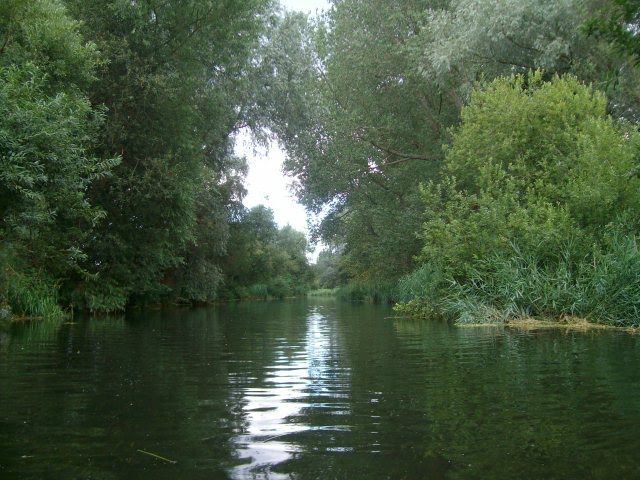
Upper reaches of the River Bure

Yesterday I had a pleasurable afternoon canoeing with my mate Nigel upon the upper reaches of the River Bure, approximately ten miles north of Norwich. A real stress-busting day, thanks Nigel.

I thought I had finished with posts on birds until we disturbed a heron lurking by the river-bank. It flew past us flapping its giant wings like some antediluvian terradactyl!

Norwich-over-the-water

Anchor Quay and Saint Miles Bridge

The re-development of Norwich-over-the-water during the past 10 to 15 years has resulted in the transformation of a run-down and near derelict area of the City into a highly desirable residential location.

Standing on Saint Miles bridge looking north-west towards New Mills.

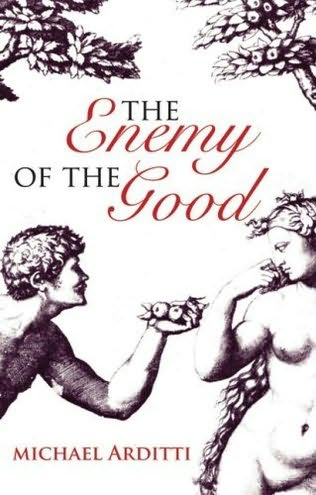
The Enemy of the Good

Everyone wants to change humanity but no-one wants to change himself. - Leo Tolstoy

Men never do evil so completely and cheerfully as when they do it from religious conviction.
- Pascal (frontispiece quotations)

I recently read a novel by Michael Arditti entitled 'The Enemy of the Good' (2009). In essence it's a novel which highlights the on-going conflict between liberalism and fundamentalism and to a lesser extent, the relationship between art and religion.

The central characters are the Granville family who consist of Edwin, a retired Bishop who no longer believes in God, but continues to believe in the idea of God and the institution of the Church; his wife Marta, a survivor of the Warsaw ghetto and a distinguished anthropologist, and their two children Susannah and Clement.

Novels which debate upon contentious issues such as religious faith are few and far between these days. Ever since the scandalous debacle which followed in the wake of Salman Rushdie's 'The Satanic Verses' (1988) the battle-lines have been drawn up between adherents of liberalism and fundamentalism, resulting in artists being wary of, and fearing to offend the wrath of religious sensibilities; indeed it's with some trepidation that I myself attempt to discuss a subject which arouses stronger than ever feelings amongst some.

The beliefs of the Granville grown-up children Clement and Susannah are central to the novel . Clement, a gay artist with HIV, retains his progressive Christian faith whilst finding himself increasingly embroiled in controversy, hatred and suffering for his liberal views. His sister Susannah discovers her true spiritual identity by embracing the ultra-orthodox faith of Hasidic Judaism. These two siblings find it increasingly difficult to accept each others beliefs, as their relationship deteriorates, the view-points of liberalism and fundamentalism are clearly delineated in their spiritual and intellectual conflict. Articulating lines such as-

'Sex is one of God's greatest gifts to us. To reject it in favour of bloodless chastity is in a very real sense to reject God', and 'Fundamentalists don't think: they bray, they parrot' uttered by the gay artist Clement, clearly display which side of the fence his character represents, while his sister-in-law Carla, the widow of Clement's twin brother, unambiguously states-

'for people with no inner life, sexuality has become the all-important measure of authenticity'.

In this novel the author Michael Arditti has written a realistic portrait of religious faith in Britain today. It's a thought-provoking, lively, at times amusing, more often tragic, tale of a conflict which continues to grow in ferocity. I particularly liked Clement's astute statement upon how the all-pervasive internet has, and continues to erode aesthetic judgement -

'Memory lies at the heart of what it is to be human. In fact I'd go further: it's the reason we both need and respond to art. It's the part of our brain that creates and shapes narratives, that filters images, that draws analogies and chucks away inessentials.... Can it be an accident that, at a time when we're trusting less and less to our memories, we're growing less and less discriminating about art? We may have a world of information at our fingertips, but we've got fewer and fewer ways to assess it'.

Arditti's novel has received numerous glowing reviews far more articulate than anything I can write; the author Philip Pullman (b.1946, Norwich) for example stated of this novel -

' The Enemy of the Good' is a vivid picture of the religious life as it's lived among the conflicts and compromises of modern Britain. Michael Arditti has extended and deepened the vision that made (his) Easter so interesting, and he must be our best chronicler of the rewards and pitfalls of present day faith'.

I recommend 'The Enemy of the Good' to anyone who is interested in acquiring a greater understanding of the complex issues arising from the conflict between liberalism and fundamentalism today, albeit in the form of an entertaining and extremely well-written work of fiction.

In an age which remains obsessed with nationalism, despite two world wars which devastated Europe, I also recommend Arditti's short statement upon a vision of a united Europe.

Wednesday, July 28, 2010

Glorious Goodwood


Time to enjoy summer on the Sussex Downs for the 5 days of the Glorious Goodwood meeting; awash with strawberries and cream, Pimms, Panama hats, classy fashion and of course, classy thoroughbred horses, at what must be the most scenic of all British race-courses. Sadly, I'm only there in spirit this year, following the meeting on TV.

Vulture


The last in a short series on the symbolism of birds, in particular, in comparative religion and alchemy.

Because it devours corpses, the vulture has often been given a bad press; however, in ancient Egypt it was identified with the goddess Isis and represented the cycle of death and rebirth. In the Grecian-Roman tradition it was seen as a bird of augury, and like the swan and raven, it was considered sacred to the god Apollo because it provided omens.

In his contemplation of religious rites for the dead, Sir Thomas Browne noted in his Discourse, Urn-Burial  (1658) -

And the Persees now in India, which expose their bodies unto Vultures, and endure not so much as feretra or Biers of Wood.........

Browne was a keen scholar of comparative religion. His mention of the prophet Zoroaster and the Persee's, migratory adherents of the Zoroastrian religion, is in fact the earliest recorded in English literature.

The vulture is encountered once more in Browne's writings, this time in his surreal catalogue of books, pictures and objects entitled Museum Clausum,

A noble Quandros or Stone taken out of a Vulture's Head.

The 'noble stone' visualized by Browne may well originate from Biblical symbolism in the form of the wisdom of the book of Job. Written in the form of poetry, the book of Job is one of the oldest and profoundest spiritual texts to deal with the problem of Man's suffering. It was well-known to pious alchemists. The Bible, however much Christian Fundamentalists refuse to acknowledge it, in their denial of the discoveries of comparative religion, (see Ostrich), contains both astrological and alchemical symbolism, including imagery of refinement and dross; whilst the 'testing' of human souls is likened to the testing of metals. Chapter 28 of Job contains an inventory of various precious metals and stones, including silver, gold, topaz, their material value to contrasted to spiritual wisdom. The Book of Job also includes the line -

There is a path which no fowl knoweth, and which the vulture's eye hath not seen. (v.7 KJV)

However, the puzzle of what is exactly a 'noble stone' or Quandros, is best solved by consulting the Martin Ruland's Dictionary of Alchemy, (both father and son were named Martin Ruland). The Rulands were theologically inclined Paracelsian physicians who served in the Court of Emperor Rudolph II of Prague. In their Dictionary of Alchemy (1612), a book which Browne owned, (Sales Catalogue page 22 no.119) a Quandros is defined as-

a Stone or Jewel which is found in the brain and head of the Vulture, and is said to be of a bright white colour. It fills the breasts with milk, and is said to be a safeguard against dangerous accidents.

 Ruland's dictionary definition of a 'noble Stone' is in all probability the source of Browne's Quandros. Such an object would be an extremely useful talisman!

Wednesday, July 21, 2010

Pelican

Today, while browsing through Sir Thomas Browne's miscellaneous writings, trying to find his assessment upon Peruvian cinchona bark, new to 17th century medicine and hailed as a 'miracle' cure of malaria, I came upon a short amusing paragraph worth reproducing as regards Browne's ornithological inclinations.

Among his numerous interests Browne was a keen bird-fancier. It's recorded that at one time he kept as a pet an owl, a bittern, an eagle and even an ostrich. A short tract upon Falconry survives, and he's also credited with coining the word 'incubation' into the English language. One wonders just how he found time to attend to any of his patients with his many hobbies!

I'm planning to add a page upon the many neologisms Browne coined into the English language soon. Anyway, here's the paragraph from a tract on the Birds of Norfolk which made me chuckle, nearly as much as seeing a photo of an octopus embracing a bottle of Ouzo. And no, a pelican did not fly over my garden today either! In his short tract on the birds of Norfolk, Browne writes-

An onocrotalus, or pelican, shot upon Horsey Fen, May 22, 1663, which stuffed and cleansed, I yet retain. It was three yards and a half between the extremities of the wings; the chowle and beak answering the usual description; the rest of the body white; a fowl which none could remember upon this coast. About the same time I heard of the king's pelican's was lost at St. James; perhaps this might be the same.

Far less funny is the plight this summer of thousands of American pelicans in the Gulf of Mexico, due to the oil disaster. Just innocent bystanders in the collision between human greed and nature. Over 612 Brown pelicans killed as a result of the spillage as of July 2010.

The Pelican was the name for a common piece of alchemical apparatus. Its function was 'the digestion of substances by long steeping in hot fluid to extract the essence'. The apparatus worked by reflux distillation - the substance under treatment was boiled and the vapour condensed in a glass head, it then flowed back again, causing a process of circulation.

Alchemical and Christian iconography often used the emblem of the Pelican as a symbol of Christ for it's self-sacrificing qualities. Browne was of course familiar with this emblem, opening the fifth book of his encyclopaedia, Pseudodoxia Epidemica with a discussion upon it, as ever attributing the antiquity of its symbolic roots to his beloved ancient Egypt, writing,

And first in every place we meet with the picture of the Pelican, opening her breast with her bill, and feeding her young ones with the blood distilling from her. Thus is it set forth not only in common Signs, but in the Crest and Scutcheon of many Noble families; hath been asserted by many holy Writers, and was an Hieroglyphic of piety and pity among the Egyptians; on which consideration, they spared them at their tables.

Tuesday, July 20, 2010

Green Woodpecker

The green woodpecker is a relatively rare bird, at least in urban settings. One rested on a branch in the garden this morning, before zipping off.

Monday, July 19, 2010

Comma


Polygonia c-album or the Comma butterfly. One flitted through the garden this afternoon. So-named because of the distinctive C-shape on its ragged-edge wing. Although my photographic guide to Butterflies of Britain and Europe (1999) states that it is a fairly common species, all species of insect, in particular bee's and butterflies, have greatly reduced in number in the last five to ten years.

Postscript: 5 days after posting this, the Daily Mail has the headline 'Half of UK's butterfly species 'threatened with extinction,' and a national week of Butterfly counting July 24th -31 st is announced !

Saturday, July 17, 2010

Octopus


A new resident to the Aquarium!

In the news today is Paul the 'psychic' Octopus. The English-born Octopus who now lives at Oberhausen Sea Life Zoo in Germany, successfully predicted all seven of Germany's wins in the Football World Cup and also Spain's win, by correctly choosing between two sealed boxes. Statistically this is equivalent to predicting heads or tails eight times, odds of 1 in 128. The World Cup winning nation is now bidding for Paul to re-locate to a zoo in Spain. Humankind tends to get excited by the idea of a creature which exhibits psychic powers, forgetting that they too possess psychic abilities, which usually remain dormant and unused.

Octopuses are zoologically known as Cephalopods, (from the Greek kephale, head and pod, foot). They are classified as predatory molluscs like squids and cuttlefish. One of the most intelligent of all invertebrates, they are capable of using tools and solving problems, have three hearts, and can camouflage themselves instantly, changing their colour and texture to match their surroundings. As they are boneless they are even able to escape from aquariums, squeezing themselves into small spaces. Octopuses have short life-spans of only three or four years.

The Penguin Dictionary of Symbols states, 'the Octopus stands significantly for the monsters who regularly symbolize the spirits of the Underworld and even Hell itself. The Octopus also corresponds to the zodiacal sign of Cancer, (see Crab) and is opposed to the dolphin. This identification is not unrelated to the creatures 'infernal' aspect, the Summer solstice being the gate of the Underworld.

The Octopus is often viewed as a sinister and scary creature. However, like the snake and spider, also invertebrates which needlessly frighten, the Octopus is an exemplary symbol of the unconscious psyche, which, as the psychologist Carl Jung constantly reminded his reader, humanity ignores at its peril.

Thursday, July 15, 2010

Norwich Castle


Perched high upon an ancient earthworks in the very centre of the City, Norwich Castle has dominated the city-scape for over 800 years. The Norman conquerors who constructed  both it and the Cathedral, affectionately nicknamed it Blanchefleur or White Flower. One can be sure that the local Saxon populace who paid tithes and taxes to their Norman conquerors would have called it something far less complimentary! The Castle has been a Museum for over 100 years now. Included in its Art Collection is Thorpe Water Frolic and The Paston Treasure.

The Castle Museum is presently hosting two temporary exhibitions, the first: Beatles to Bowie, the sixties exposed, is an exhibition of over 150 portrait photographs of pop stars including The Beatles, Jimi Hendrix, David Bowie and The Rolling Stones. I couldn't help noticing the average age of the people attending this exhibition was near, or at, retirement age, which suddenly made me feel very old! Anyway, it was very enjoyable looking at these now historical photographs. Almost all of the photo's exhibited seemed to be portraits of artists who, immediately a camera-lens is pointed towards them suddenly become extremely photogenic. Even a very young Marianne Faithfull, barely out of Convent school appears supremely photogenic.

Marianne Faithfull, The Salisbury Pub, London (1964) by Gered Mankowitz

It's a curious fact that the great great Uncle of Marianne Faithfull (b.1946) was none other than Leopold von Sacher-Masoch (1836-95) the Austrian nobleman and author of the erotic novel, Venus in Furs (1870). Through his surname and the subject-matter of his novel, the word masochism was introduced into the English language. Faithfull is also credited with introducing to Rolling Stone Mick Jagger the occult novel by Mikhail Bulgakov, 'The Master and Margarita' (1938), which inspired the Rolling Stones song, 'Sympathy for the Devil.'

The other temporary exhibition was perfectly complimentary to pop portraits; Flashback, a retrospective of the art of Bridget Riley (b.1931) .


Riley's optical canvases have always fascinated me ever since seeing one of her works reproduced on an early 1970's LP cover. Although Riley's art-work typifies the psychedelic era, she herself is quite uninvolved with such drug-induced illusions. Will Self has written a perceptive, if somewhat critical review of Riley's paintings. However it was good to be reminded that Britain was innovative in the 1960's in the world of visual art with pop artists including Riley as well as David Hockney, Richard Hamilton, Peter Blake and Norwich-born Colin Self contributing to Britain's 'Golden Age'.


Movement in Squares 1961


Here's another optical image which demonstrates that seeing is not always believing, or rather, how easily the human senses can be deceived.

Do not adjust your screen!

Wednesday, July 14, 2010

Tragedy of the Street of Flowers


Eça de Queirós circa 1882


I've just finished reading a novel by an author who is considered to be Portugal's greatest 19th century novelist, Eça de Queirós ( 1845 - 1900) author of 'The Tragedy of the Street of Flowers'.

'The Tragedy of the Street of Flowers' is a novel written circa 1875 but which has only come to light recently. Found amongst the deceased author's paper's in 1900, it was not published in Portugal until 1980 when the copyright of Queirós' writings expired. It was translated into English in 2000, a full century since the author's death. Queirós himself stated in 1877 of his novel -

'It's not immoral or indecent. It's cruel..the best, most interesting novel I have yet written... a real literary and moral bombshell'.

Before reviewing this novel a word of praise must be said for the role of translator. Where would we lovers of the novel, in the Babel-like din of World literature be without them ? A good translator can introduce new literature, transforming the reader's understanding of historical, cultural and social conditions throughout the world. They can even cast fresh light upon the inner dialogue and moral dilemmas of well-loved and enduring characters of World literature.

Without having to dedicate the formative years of one's life to mastering several languages to become a polyglot, the classics of European literature would remain a closed book were it not for the translator. From the Icelandic Sagas of the Dark Ages, to the grandfather of all European novels, Cervantes 'Don Quixote', to the psychological analysis of memory by Marcel Proust in his novel of recollections, to Mikhail Bulgakov's surreal satire upon Stalinist totalitarianism, 'The Master and Margarita', homage must be paid to the translator for their devotion of many hours, re-shaping the written word from one language to another. One grows fonder of the translator's skills with the passing of time, placing trust in recognised names for their meticulous precision, inspired insight and often sheer drudgery, to open windows to new works of world literature to the questing reader.

The winner of several awards for her translations, Margaret Jull Costa has breathed new life into Quiroz's novels, translating his witty dialogue and observations on Lisbon society with panache. Together the innovative publishing-house of Dedalus, along with Costa's modern translation and Eça de Queirós' prose combine to make 'The Tragedy of the Street of Flowers' a cracking good read, whether one is familiar with the aesthetics of the 19th century European novel or not. And although it has been called an unfinished or incomplete novel, 'The Tragedy of the Street of Flowers' assuredly does have a full and satisfactory ending.

The story of 'The Tragedy of the Street of Flowers' begins at a theatre in Lisbon with the appearance of Genoveva, a sophisticated and stunningly beautiful woman just arrived in Lisbon from Paris. The young law graduate Vitor da Silva falls in love with her at first sight and becomes a bitter rival to her present lover, Vitor's one-time friend, a wealthy Portuguese dandy named Damasco .

However Genoveva is in reality none other than a Parisian courtesan or high-class prostitute. Throughout the novel her cunning, true to her femme fatale nature, outwits and exploits both Vitor and Damasco, pitting them against each other, exploiting their generosity and lust for her.

In essence the novel concerns itself not only with the struggles and delusions of Vitor and his love for Genoveva but also with Portuguese society at large in Queirós' critical observation of the conceits, shallowness and prejudices of Lisbon society. This is apparent early in the novel when Genoveva throws a evening soiree. The party allows Queirós to parade before the reader an extraordinary gallery of characters from Lisbon society. It's here in the novel that the influence of the founder of the novel of social realism, Honore de Balzac, (1799-1850) author of a vast cycle of over 100 novels which depict the whole spectrum of Parisian society can be detected. Balzac's influence hovers over Queirós' own portrait of the faults, delusions and weaknesses of Portuguese society.

The main protagonist, Vitor reads Romantic authors such as Byron and Tennyson .His feelings throughout the novel, change as often as the wind. Vitor is the orphaned ward of a retired Judge, his Uncle Timoteo to whom his upbringing and care is entrusted.

The wooden-legged Uncle Timeteo is a strong and memorable character in the novel. He served in India where he lost a leg in a tiger-hunt. Extremely wise to the ways of the world, he reads The Times newspaper daily and is, like his creator, an Anglophile and mouth-piece for Queirós' own love of England. Queirós was that most rare bird by today's standards, a European Anglophile, who lived in Newcastle and Bristol as a diplomat for nearly twenty years.

In an era in which much of the world, often quite rightly, perceives English culture, society, and economics as not entirely salubrious, it's refreshing to be reminded of a time long ago when the English were admired, even if those actions are now defined as self-serving Imperial colonialism. Uncle Timon enthusiastically exclaims to Vitor-

'Do you know, Sir, what they've achieved in India? They created everything! Cities, railways, bridges, docks, navigable rivers, plantations. Before, when there was famine in India, they would die in their millions! And now they never lack for rice because the Englishman is there to give it to them'.

Without wanting to post spoilers, early in the novel Uncle Timoteo and Genoveva cross swords when Genoveva, mounted upon a horse, kicks a small child to one side in front of the elderly and honourable Uncle Timoteo. He immediately challenges her to a duel before shuffling to the novel's background when, at the story's denouement, he pieces together the shock Oedipal revelation which tragically affects Vitor's and Genoveva's love-affair.

Other notable characters in a novel full of original characters include the artist Camilo Cerrao, commissioned to paint a portrait of Genoveva, but forever theorizing and changing his mind upon the style, function and nature of art so much that little real painting is ever accomplished. Like much great art a strong vein of both comedy and tragedy runs throughout 'The Tragedy of the Street of Flowers.'

The French novelist Emile Zola claimed that Queirós was a greater writer than Flaubert, (well he would, wouldn't he)! And although Queirós has been compared to realist novelists such as Balzac, Zola and even Proust he is, as a reading of 'The Tragedy of the Street of Flowers' confirms, no mere pastiche of these 19th century Realist novelists, but an original voice of European literature in his own right. Queirós' greatest masterpiece is however considered to be 'The Maias' of 1888. It too engages in satirical observations upon the social pretensions of 19th century Portuguese society, specifically Lisbon society. I'm looking forward to reading 'The Maias' soon!

Friday, July 09, 2010

Heatwave


The south and east of England is presently experiencing a heatwave with the mercury hitting 30 celsius. One more warm night and day to go before it eases. Tomorrow is Norwich City's big civic day with the Lord Mayor's procession. This year the procession has been shifted forward to 5 p.m. instead of 6:30 p.m. I wonder if the organizers are now regretting that change of schedule in view of the predicted heat.

I like to watch this annual event as one can with a little discernment gauge the mood and wealth of the City by the quality and zest of the 70-odd floats that slowly trundle through the City. With an estimated crowd of 30,000 usually the largest assembly of people in the city centre in the year, the event's history can be traced back to the days of the medieval Guilds, associations of various trades and professions celebrating their relative autonomy. For over 400 years the procession was led by the 'Snap' dragon accompanied by the 'whiffler' a crowd-controlling civic who 'whiffled' or waved a sword in the air. Lewis Carroll in his nonsense poem 'Jabberwocky' uses the word thus-

And as in uffish thought he stood,
The Jabberwock, with eyes of flame,
Came whiffling through the tulgey wood,
And burbled as it came!


Modern version of the Norwich Snap Dragon.


Ancient Whiffler

Another literary reference to Whifflers can be found in Shakespeare's Henry V Act 5 where the line, "which like a mighty Whiffler 'fore the king, seems to prepare his way" occurs.

By far the best information on the tradition and costumes of Norwich Whifflers including a priceless photo of the 1951 Lord Mayor's procession led by mace-bearer and accompanied by two Whifflers can be found at Norwich Whifflers.

On-line dictionary definitions of the word 'Whiffler' deliver a bewildering number of interpretations from - 'One who whiffles, or frequently changes his opinion or course; one who uses shifts and evasions in argument; hence, a trifler' to -

'Whifflers, or fifers, generally went first in a procession, at length a name given to those who went forward merely to clear the way for the procession. In the city of London, young freemen, who march at the head of their proper companies on the Lord Mayor's day, sometimes with flags, were called whifflers, or bachelor whifflers, not because they cleared the way, but because they went first, as whifflers did."

Or even- 'an officer who went before procession to clear the way by blowing a horn, or otherwise; hence, any person who marched at the head of a procession; a harbinger.'

But the Whiffler's ancient historical roots may in fact go back to the early Saxon era as an armed attendant who cleared the way for a procession (from wifle battle-axe, from Old English wifel, of Germanic origin; the attendants originally carried weapons to clear the way) as I first stated, a kind of civic crowd-controller, sometimes genteel and humorous, other times not.

Confusion about the meaning of this word arises from the fact that it's both a verb and a noun; the verb to whiffle, as Carroll uses it as an onomatopoeic, like the sound of a sword or stick being swished in the air; and it's a noun, as a figure of civic authority as in, 'Look out! Here comes the Whiffler!' But now I'm beginning to waffle, it must be the heat. Waffle hmmm, now there's another interesting word.


Civic crier, three Whifflers and Snap Dragon 2009