Monday, August 09, 2010

Bus in a Hole


1988 - A surprise stop for the passengers of the number 26.
No-one was hurt.


Perhaps I should not have mentioned the other day that geologically Norfolk is predominantly composed of chalk, (Aug 7th post) because a new hole has now appeared in a Norwich road some 9 feet deep! Memories from 1988 when a double-Decker bus fell into a hole have now resurfaced. This world-famous image of an extraordinary event is well worth seeing again aS visible proof that living in Norwich can sometimes be exciting!

Norwich in fact  is renowned for having subsidence problems. Not only does it have many chalk mines, but also a network of tunnels underneath its streets and buildings, including more undercrofts than any other UK city.

It's possible that the chalk mines of Norwich date from as early as the 11th Century. Chalk was mined underneath the City and extracted in great quantities to burn into lime for mortar. Flint was also mined and used as stone for building. Mining tunnels known to exist under medieval Norwich can be found between 12 and 90 feet under the surface . They vary in size from 6 to 16 feet in height and from 6 to 12 feet in width . These tunnels and mines are often arranged in a grid-like pattern. City engineers have to regularly inspect these tunnels in order to determine their condition and to prevent any further collapses.

The most investigated system of these tunnels is a 1600-feet-square grid maze of tunnels beneath Earlham Road. It was re-discovered in 1823; coloured lights were fitted and some of the large passageways were given attractive names such as Beehive Lane, Bacchus Street and Royal Arch. They were once a popular attraction for tourists and local courting couples to wander through.

A full history and record of the extensive underground passages, undercrofts and mines in Norwich has yet to be written.


Saturday, August 07, 2010

The Supper at Emmaeus


Here's another painting Sir Thomas Browne may have viewed. 'The Supper at Emmaus' by Cornelis Engelsz (1575-1650).

Its a great example of the Dutch 'Golden Age', of painting, combining two of the most popular of all Dutch genres, Biblical scenes and still-life. The detail of the various supper items depicted in the foreground, bread, fish and meat is exceptionally realistic. The central message of the picture is in the stark contrast between the very public, lavish and earthy supper in the foreground, to the private, frugal and heavenly supper depicted in the dimly-lit background. The Resurrected Christ, having broken bread has just revealed his identity to two of his disciples. (Luke 24 verses 13-35).

'The Supper at Emmaeus' (1612) was owned by the lawyer and MP Nathaniel Bacon (1550 - 1622) who was knighted in 1604. He was the uncle of Nicolas Bacon (1623-1666) also of Gillingham Hall. As Browne was a friend and visitor of Nicolas, even dedicating his Discourse 'The Garden of Cyrus' to him. it's highly possible he could have viewed this painting when visiting Gillingham Hall. The painting was subsequently purchased from the Bacon family by Norwich Castle Museum in 2004.

Hydrangea


Hydrangea thrive upon chalky soil of which there's plenty throughout the low-laying county of Norfolk.

The large hydrangea shrub in my garden is certainly over thirty years old, maybe as old as my plum and pear tree, planted when the houses and gardens of Woodlands Estate were first established early in the 1950's. I personally associate the large flowering heads with happy summer days spent with my grandmother as a child.

The Oxford English Dictionary defines hydrangea as - a shrub with flowering heads of white, blue or pink florets, native to Asia and America. Origin, mod. L. from Gk hudro -'water' + angeion 'vessel' (from the cup shape of its seed capsules).

Monday, August 02, 2010

Oscar and Lucinda


Last night I watched the film 'Oscar and Lucinda' (1997) directed by Gillian Armstrong. Set in the middle of the 19th century, it's the story of Oscar (Ralph Fiennes) the son of strict Plymouth Brethren parents and Lucinda (Cate Blanchett) an independent-minded Australian entrepreneur.

When attending Oxford reading theology, Oscar is introduced to the joys of gambling, specifically horse-racing. Frequently lucky and believing himself to be inspired by divine providence, the bumbling and socially-inept Oscar persists in donating his winnings to the poor. Meanwhile Lucinda discovers a passion for glass and purchases a Glass-works with an inheritance. Oscar and Lucinda first meet aboard a ship bound for Australia. The pretext for their meeting is ostensibly for the purpose for Lucinda's confessional, Oscar having recently been ordained and emigrating. The pair soon become friends with a shared passion for card-playing. Oscar's justification for gambling is that of the famous wager of Pascal which argues that all Christians are gambling their souls in hope of God's existence, love and redemption.
Without wanting to post spoilers, the crux of the romantic drama concerns a wager between Oscar and Lucinda of their respective inheritances, that Oscar can transport a glass Church from Sydney to Bellingen on the North-west coast of New South Wales, a journey which involves the crossing of no less than six rivers and hazardous terrain.

Based upon the Peter Carey novel which won the 1988 Booker prize, 'Oscar and Lucinda' is a film which established Cate Blanchett's acting career. The other notable star of this film is, as with 'Picnic at Hanging Rock' (Dir. Peter Weir 1975), the stunning Australian scenery. 'Oscar and Lucinda' also highlights the basic living conditions of the early Australian colonists.

The residue of Protestant ethics continues to associate gambling as a sin, even among those whose morality is no longer determined by Christian ethics whatsoever. This is primarily due to the fact that during the 18th century a day at the races spent gambling was viewed as a threat to the established social order. A Lord attending Newmarket races could by the day's end be a pauper and a pauper could acquire the wealth equivalent to a Lord. Primarily for this reason alone, the notion of acquiring wealth without industriousness, circumventing the Protestant work-ethic, preachers railed from the pulpit against the 'sin' of gambling. And to be fair, there is a scene in the film which highlights the very worst consequence of ruination from gambling, namely, suicide. However, as Oscar fully realises, many aspects of life and love are in fact far from being certainties, but very uncertain gambles in most lives.

At the present time of writing the author Peter Carey, who has won the Booker prize twice, is priced at 5-1 to win the Booker again, with the Greek-Australian Christos Tsiolkas, author of 'The Slap', priced at a 9-1. Personally, I'm considering having a small bet that Carey wins the Booker Prize for an unprecedented third time. Just don't put your shirt on it !

Friday, July 30, 2010

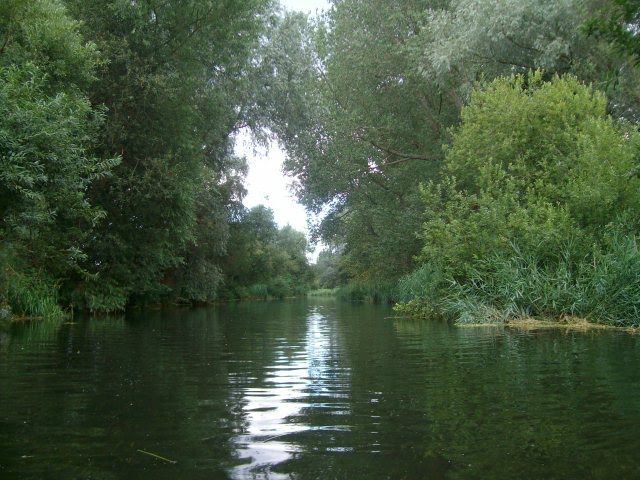
Canoeing on the River Bure

Upper reaches of the River Bure

Yesterday I had a pleasurable afternoon canoeing with my mate Nigel upon the upper reaches of the River Bure, approximately ten miles north of Norwich. A real stress-busting day, thanks Nigel.

I thought I had finished with posts on birds until we disturbed a heron lurking by the river-bank. It flew past us flapping its giant wings like some antediluvian terradactyl!